The K-Web team blog — field notes on the Knowledge Web since 2003. RSS.
K-Web News is back online
Saturday, May 16, 2026 · by Karl
After a long quiet stretch, K-Web News is back — same place it always was, now hosted under our own roof.
The full archive from 2003 onward is below, untouched. New notes will land here as the work continues.
Archive — 2003–2023
2023 2015 2013 2012 2011 2010 2009 2008 2007 2006 2005 2004 2003
Sunday, November 19, 2023
The new Connections series is out on Curiositystream, see our Facebook page for details: https://www.facebook.com/pages/James-Burkes-Knowledge-Web/1636642569892667
This site is for archival purposes.
Posted by Patrick McKercher
Sunday, April 05, 2015
k-web.org will remain online for archival purposes, but pls refer to our new Facebook page for updates: https://www.facebook.com/pages/James-Burkes-Knowledge-Web/1636642569892667
Posted by Patrick McKercher
Sunday, May 05, 2013
James is "noodling away" (as he says), on the new book. Graham has been doing yeoman's work assessing user interface options, and there's renewed interest in making a Magic style card game. You can play with a mock-up of K-Web Mystery Tours here: http://webbrain.com/brainpage/brain/C6015FA0-82BF-F1FA-9D05-0EA9FD7F845E#-2763 We can configure colors, icons etc, so pls feel free to send feedback
Our hope is to do something similar from a database, but failing that, we may just have to crowdsource data entry, and/or have individual create comtent pages. Lemme know if you'd like to help with that.
Posted by Patrick McKercher
Monday, September 10, 2012
Posted by Patrick McKercher
Saturday, April 28, 2012
Posted by Patrick McKercher
Monday, April 23, 2012
Posted by Patrick McKercher
Wednesday, April 04, 2012

Teacher videoconference is this coming Saturday; still a few spots left. Interesting ceramic mural project based on a k-web "mystery tour." We're looking a for volunteer webmaster.
Posted by Patrick McKercher
Wednesday, March 07, 2012
Labels: GUI gig, teacher conference
Posted by Patrick McKercher
Monday, February 13, 2012
Sunday, January 08, 2012
James is working on a short video illustrating Mystery Tours, and we've had some promising discussions on K-Web development. Stay tuned!
Posted by Patrick McKercher
Wednesday, December 07, 2011
Posted by Patrick McKercher
Monday, July 18, 2011
July 12, 2011 | Author: AAAS member -- Thomas J. Impelluso, Ph.D., San Diego State University
Science historian James Burke's Knowledge Web is an online database that allows users to explore the history and creation of ideas, connecting seemingly unrelated events, showing that all knowledge is somehow interrelated.
What do Normans riding in stirrups, Evangelista Torricelli's vacuum, and Alexander Graham Bell's telephone have in common? Ask science historian James Burke and he'll take you on a fascinating journey spanning the centuries that shows how the development of military technology helped develop modern day telecommunications.
Since the 1970s Burke has astounded and entertained audiences with his unique perspective on innovation via his TV series "Connections." In each episode he examines a particular event in history and traces the path of that event through a series of seemingly unrelated events to a fundamental and essential aspect of our modern world.
Today Burke is taking this view of technology, science, and social change digital. He's creating a searchable database called the Knowledge Web -- "an expedition in time, space, and technology to map the interior landscape of human thought and experience."
AAAS MemberCentral had the opportunity to talk with Burke about his latest project. Here are his comments.
AAASMC: What is the Knowledge Web suppose to do?
James Burke: The prime aim of the Knowledge-Web, or K-web for short, is to encourage students to take journeys through space and time to (hopefully) discover unexpected and cross-disciplinary connections. A typical short journey through the K-web might include:
Mozart (plagiarized) Beaumarchais (who financed) Jefferson (who in turn admired) Beccaria (a believer in) phrenology (who influenced) Follen (jailed by) ETA Hoffman (who was a role-model for) EA Poe (who in turn inspired) Rachmaninoff (who bankrolled) Sikorsky (who built the first) helicopter.
Taking such journeys helps the student recognize that no subject exists in isolation, and that all knowledge is somehow interrelated, and makes it easier to see the relevance of academic study to daily life. Most important of all it is hoped that use of the K-web will stimulate the realization that in the way we are all connected, no individual is irrelevant.
AAASMC: Describe how K-web works.
Burke: It is a dynamic, interactive construct made up of interconnected nodes. Each node represents a person or artifact or idea, or event in history. Nodes are split about equally between the humanities and the sciences.
In its present, very early iteration, the K-web contains about 2,400 nodes, each connected to other nodes that have relevance to it. Relevant nodes may be: key friends, colleagues, teachers, students, role models, family members, collaborators, detractors, artifacts, events, etc. The present 2,400 nodes are thus interconnected in a total of around 30,000 ways.
The main K-web graphic representation looks rather like a spiderweb, with the selected node at the center and connecting filaments radiating out to ‘connectees.’ These in turn are clustered around by different color-coded, smaller-scale secondary connections. Mousing over a node provides a pop-up one-line descriptor (e.g. ‘German physicist’). Mousing over a connecting filament produces a pop-up link identifier (e.g. ‘taught by,’ colleague of,’ etc.).
Double-clicking on a node-name produces a 1,000-word biographical text, which includes text hyperlinks to connected nodes. Clicking on the hyperlink takes the user to that node’s text and web. Texts also include vital stats and hyperlinks to graphic representations of relevant locations and timelines, as well as to visual (stills and video) and audio materials (where relevant). Planned are interactive audiovisual data (so that a user can, say, interact with a virtual representation of the subject).
The K-web interface is not yet finalized (the project urgently needs design help!) but will include:
• Nodes initially appear on a graphic of nested translucent spheres, each representing a century (modern world, on outer sphere, carrying modern-world artifacts, ideas, events, etc. These nodes may also act as ‘entry gateways’), and each sphere-surface carrying the spiderweb of nodes relevant to that century. Once a node is selected, the graphic switches from nested spheres to the two-dimensional spiderweb format.
• Nodes can be accessed at random from the spiderweb, or searching by name, keyword, nationality, language, location, date, general field, discipline, major work, education, etc. using drop-down menus or a taxonomy tree.
• Predetermined ten-jump ‘Mystery Tour’ journeys can be chosen.
• Journeys can be recorded and re-run if required; or e-mailed. There is a help avatar (me).
It is hoped that even the present, limited iteration contains enough potential journeys to exhaust the requirements of a full class of students for a semester.
AAASMC: Does the architectural design of K-web suggest a collective consciousness?
Burke: Throughout history to some extent there have been occasions when the same environmental problem (such as drought) has led unconnected (hunter-gather) communities to develop the same solution (agriculture). But I see this rather as an example of the way in which our brains are similarly wired so that they analyze similar problems and see similar solutions.
In more recent times, as various means of communication have been developed (and especially today’s Internet), it has become easier to be aware of what people are thinking and doing, even on a global scale.
However, if there is, indeed, a ‘collective consciousness,’ I see it mediated by technology. It is this technology-facilitated ‘connectedness’ which the K-web seeks to emulate, so as to give users practice in developing essential new ‘skills of interdependence’ for their own (and, it is to be hoped, for the collective) good.
AAASMC: Might the K-web reveal how a few well written ideas, properly communicated, can shake the foundation of institutions?
Burke: I suppose a few well-chosen ideas, well written and properly communicated, have always shaken institutions throughout history. Galileo’s remark about the moons of Jupiter circling the planet (‘eppur si muove’) questioned the Catholic church’s entire cosmology; news of the subatomic tracks seen in CTR Wilson’s cloud chamber upturned physics; Fibonacci’s document on double-entry bookkeeping revolutionized banking at a stroke; Martin Luther King’s ‘I have a dream’ shook American society to its foundations.
But the idea that ‘great thoughts’ bring great change may be primarily a product of our millennial culture of scarcity, in which literate, informed people were a tiny minority, where innovation was rare and its effects slow, where might was right, and where only a very few could access the tools with which to bring change. As a result we came to refer to the self-expression of those ‘few-with-access’ individuals as ‘genius.’ But given the same access, others might well have equaled or surpassed them.
Technology is now beginning to give such access to all, and, thanks to the potential of nanotechnology, we may stand on the threshold of a new era of material and intellectual abundance. Every healthy brain on the planet will have soon the means globally to disseminate its thoughts.
Old-fashioned reductionists may sneer, but the coming drivers of change may no longer be the specialists, but rather the generalists, able to identify and map trends in research and discovery across all disciplines, and to see ways in which cross-pollination of ideas will bring ever faster rates of discovery and innovation. The first generation of such generalists may receive their first, school-years experience of what lies ahead of them from primitive systems like the K-web.\
AAASMC: Should the Nobel Prize in science still be going to one person in an era of interconnectedness?
Burke: Nobel should go ahead with what it does: recognizing great efforts and insights. Too much nonsense is talked about interconnectivity, as if we could do away, tomorrow, with the nuts and bolts of common- or-garden scientific hard work and discovery. We’re still a long way from turning science entirely over to software and machines.
However, I wonder if it might not be time to establish an extra, cross-discipline Nobel, for those who have the ability to see across the no-man's-land that lies between the disciplines, to predict the changing patterns and trends in discovery, and act as lookouts on the frontiers of knowledge, so as to prepare the rest of us to make intelligent choices about which innovations we want to embrace, and which avoid. Here again, tools like the K-web might offer very early training in that kind of thinking.
AAASMC:What role might sites like the K-web have on healing the rift between the arts and sciences?
Burke: I wonder if the so-called rift between the arts and the sciences is not just a product of the late eighteenth-century Romantic Movement, which for the first time spread the concept of individualism and of the artist as in some way ‘different,’ and promoted the idea that the arts were somehow separate from, and superior to the activities of everyday life.
It’s always easier to adopt stereotypes and cling to urban myths. We’ve hung on to this view of the arts and sciences well beyond its shelf life. My impression is that even as C.P. Snow was presenting his ‘Two Cultures’ paradigm back in 1959, it was already out of date.
Modern media, from radio to Internet, have done much to popularize, explain, and make accessible science and technology and to show their relevance to daily life. At the same time, the cult of celebrity, and pop culture in general, has helped to demystify the arts.
In this ‘unified’ environment, tools such as the K-web are perhaps useful in accelerating a process already well under way. Arts and sciences are just two sides of the same coin.
AAASMC: You are a great communicator. How can scientists improve how they communicate both with each other (and across disciplines) and with the public?
Burke: Thank you. I think younger scientists are already communicating their ideas to the general public much better than did the generation before them. This is a product of the times. We’re all doing it. For one thing, the general public are better educated and to a large extent, thanks to schools and the media, are already comfortable with much of the vocabulary of science and technology.
However this is only a first step. As information and communications technology bring a radical surge in the rate of innovation, the rising concern on the part of the public regarding the social consequences of its application will demand much greater real understanding of what’s going on in R&D well in advance of any public release of innovatory products.
However, it has become clear over the past few decades that the social institutions are incapable of satisfying such demand. In particular, with regard to such matters as climate change, genetically modified crops, stem-cell research, etc., there is a growing and urgent need to develop more efficient, more transparent, more democratic ways of working through these issues.
It would seem unwieldy to add a ‘Public Understanding of Science’ course to a science student’s already overburdened university years. Perhaps we might train a separate cadre of ‘interpreters,’ whose task it would be to act as lab-to-public go-betweens, who might also better brief our political representatives.
Though I don’t hold out much hope for the survival of that particular class, as the electronic media increasingly make the idea of a single representative, speaking for hundreds of thousands (sometimes millions) of people, seem more and more like an eighteenth-century answer to a twenty-first century problem. K-webs and their like might help us on the road towards developing better mechanisms for arriving at collective understanding and collective decision making about the kind of world we want to live in. A world, incidentally, almost entirely shaped by science.
Posted by Patrick McKercher
Wednesday, June 22, 2011
Posted by Patrick McKercher
Monday, May 09, 2011
Posted by Patrick McKercher
Monday, February 07, 2011
Labels: education
Posted by Patrick McKercher
Monday, January 17, 2011
Posted by Patrick McKercher
Thursday, June 17, 2010
Posted by Patrick McKercher
Monday, March 22, 2010
http://oufm.open.ac.uk/fm/e8fd52-1976. Meeting itself starts 30 min in.
Labels: Programmers meeting
Posted by Patrick McKercher
Thursday, January 21, 2010
Posted by Patrick McKercher
Wednesday, June 03, 2009
Posted by Patrick McKercher
Friday, May 29, 2009
Posted by Patrick McKercher
Wednesday, April 22, 2009
Posted by Patrick McKercher
Wednesday, March 18, 2009
we are having a videoconference with JB and the programmers on Saturday and have found some new software that we think will make it possible to do some of the more advanced features much sooner. Stay tuned! IWe'll have vodeoconferences with the other teams once the basic system is ready to test. Let me know if you'd like an invite, and to which team (education, administration etc).
Posted by Patrick McKercher
Wednesday, December 31, 2008
Posted by Patrick McKercher
Monday, November 10, 2008
Posted by Patrick McKercher
Tuesday, September 23, 2008
Posted by Patrick McKercher
Sunday, July 06, 2008
Posted by Patrick McKercher
Saturday, May 10, 2008
He's also working on a new book.
We're also working on a Connections themed exhibit for the US Patent Museum and the National Inventors' Hall of Fame
as well as an NSF grant project with the University of Central Florida, which is doing interesting 3D work.
Posted by Patrick McKercher
Wednesday, March 05, 2008
James is writing K-Web biographies, thinking about the next book (which may be something of a departure) and keynoting at conferences. We're also in discussions with the Inventors Hall of Fame/US Patent Office Museum on a Connections exhibition. I'm working with TheBrain on the new beta, and will be writing grants over spring break between classes. Content, software and fund-raising help are badly needed if we are to make James' vision widely available to the world. Contact me if you help in any way
pmmckerc@ucsc.edu
Posted by Patrick McKercher
Sunday, January 13, 2008
Wednesday, December 12, 2007
Posted by Patrick McKercher
Monday, July 09, 2007
I've had a longtime interest in how we could use virtual reality immersive worlds with K-web too; if you'd like to get a sense of the potential, check out this MIT conference (videos of presentations) http://alwayson.goingon.com/permalink/post/15475
Posted by Patrick McKercher
Friday, June 15, 2007
The new book!
The Founding Fathers. Networked.
In AMERICAN CONNECTIONS: The Founding Fathers. Networked. (Simon & Schuster Trade Paperbacks; July 2007; $17.00), James Burke – best-selling writer, television host, and world-renowned authority on the history of technology and science – returns to the format of his perennially popular book, Connections. Exploring the interconnections between the men who signed the Declaration of Independence and a countless array of artists, writers, scientists, politicians, trendsetters and scoundrels who came after them, AMERICAN CONNECTIONS celebrates the “six degrees of separation” that make history both fascinating and relevant. With his trademark irreverent wit and astounding erudition, Burke employs a dazzling narrative legerdemain as he brings each of the fifty-six historical threads full-circle to a modern-day bearer of the Founding Father’s name.
Burke begins each chapter with a thumbnail sketch of the Declaration signer, often dispelling the notion that these iconic figures (many of them now virtually forgotten) were men of perfect principles. John Hancock, for instance, was an egomaniac whom nobody liked. Samuel Chase was “universally despised… a foul-mouthed rabble-rouser.” Carter Braxton’s complexion “reflected the glow of a good
After reintroducing these history-making men, Burke then takes readers on mini-tours through time. With numerous stops along the way, Benjamin Franklin’s connections take us from that remarkable American Renaissance man to “Owl and the Pussycat” poet Edward Lear, then onto early chain-bookstore pioneer W.H. Smith, Florence Nightingale, Frederick Law Olmsted, and Carl Zeiss. Thomas Jefferson leads to an Italian political philosopher named Cesare Beccaria, who first “measured” the meter, to James Smithson (he of the Smithsonian Institution), to the inventor of the kaleidoscope, the discovery of hay fever, an early proponent of anesthesia, and Albert Einstein. From John Adams, known in his day as “His Rotundity,” we meet teacher of the deaf Thomas Gallaudet, Sir Walter Scott, J.M.W. Turner, and Clementine Hozier (wife of Winston Churchill).
Posted by Patrick McKercher
Saturday, April 21, 2007
I was playing around with a visual map of JB's work at http://www.1-900-870-6235.com/
by artist Ron Wild. I zoomed in a portion and realized it got me to WWW content, in this case JB Scientific American articles (all of some and the 1st part of other with link to rest) http://www.1-900-870-6235.com/Connections.html
No doubt there are other treasures to be found on the map as well.
Posted by Patrick McKercher
Saturday, April 14, 2007
It's been a hectic "break" between quarters since i've been working on an NEH grant, as well as one for PBS, which entailed a trip to DC. We've having a videoconference for technical folks this Friday. More to follow for other teams when the new beta is up. I just got this email from Chris Imhof, a teacher in CO who's been doing great work on K-Web:
"...We also are going to a great Ben Franklin exhibit at the Denver History Museum in the next couple of weeks - so I'm breaking from the traditional worksheet and using the [K-web] card game as a way for students to work through the exhibit... I've been doing talks at a number of schools around Denver -- to indpendent and public schools who want to begin moving in the direction of capturing 21st century skills - the new buzz word - along with global education -- but I really have come to the conclusion that one of the biggest skills now is seeing or identifying innovation for the future. The k-web is the best place to teach student to see patterns in the past to wire them to see those hidden patterns in the
present.
Case in point - we went on a field trip to the National Renewable Energy Center in Golden a week ago - and I had 2 11-year-old girls arguing with a couple of federal scientists that the next big energy leap is going to be solar - not wind - based on a pattern they saw with steam and then with petroleum. It's a long story, but they saw the continued development of computer chip (silicon) with solar research along with material engineering -- the next big breakthrough in the next 20 years. We just completed our Sustainable Futures Fair (replaced science fair) where students do reasearch of current global problems, current work in the area and make predictions or imagine solutions for the next 20-50 years. Anyway thyese kids see us wearing solar collecting clothes and highways and parking lots as enormous solar collectors.
To get to the point -- this is where I can see the use for the Kweb -- that
answers the big "so what" - it hits a big skill needed in the future and is a tool that people will be using alongside many others in the classroom of the future -- hopefully in mine very soon. :)
Best regards, Chris
Posted by Patrick McKercher
Saturday, March 17, 2007
Posted by Patrick McKercher
Wednesday, January 31, 2007
This series has been hard to find in the past.
A number of people have volunteered lately to work on the open source version of K-Web, and we are continuing to work on the TheBrain version as well. Java programmers and systems administrators in particular are needed.
JB has created a new list of objects, so content writers are needed too!
Posted by Patrick McKercher
Wednesday, January 03, 2007
A major hurdle that teachers need to cope with in using K-Web is the restrictions put on them, not to mention the pressure, of high-stakes testing. Here's a funny song about this not-terribly-amusing problem: http://www.npr.org/templates/story/story.php?storyId=6705929
In true K-web spirit, it's by Tom Chapin, brother of Harry, a fine artist and great humanitarian. Their grandfather was Kenneth Burke, genius autodidact philosopher who reinvented the field of rhetoric in the last century (and my personal hero). Burke wrote for The Dial, founded by Margaret Fuller (chum of Emerson and Thoreau), whose descendent was Buckminster Fuller, another persoanl hero.
Posted by Patrick McKercher
Tuesday, November 07, 2006
Working on an NSF grant and the new Thebrain.com beta. Here's a incredibly clever video some of Chris Imhof's 6th grades students made based on their work with K-Web http://www.ourmedia.org/node/266829
Posted by Patrick McKercher
Thursday, September 28, 2006
You can make your own K-Web on a Mac http://pathway.screenager.be/index.html
A very cool touchscreen that will enable exciting ways to manipulate K-Web http://mrl.nyu.edu/~jhan/ftirtouch/
Posted by Patrick McKercher
Thursday, August 31, 2006
the big news is that we're partnering with Thebrain.com to do a more complete version of K-web. This will make it much easier to add content. We need programmers and testers, so let me know if you want to participate.
Ken Robinson recently did an interesting and entertaining talk http://www.ted.com/tedtalks/tedtalksplayer.cfm?key=ken_robinson&flashEnabled=1
James and I are reading his new book Out of Our Minds. It makes a strong argument for why the K-Web is so crucial, highly recommended. If you order it from the k-web store, you'll support the project.
Posted by Patrick McKercher
Monday, August 14, 2006
http://am.mediasite.com/am/viewer/Viewer.aspx?layoutPrefix=LayoutLargeVideo&layoutOffset=Skins/Clean&width=881&height=648&peid=172f6de5-135b-4ba0-9207-ac6d383812c9&pid=fc503ef3-4a4e-44a6-b289-c915d8bf7bd3&pvid=502&mode=Default&shouldResize=false&playerType=WM64Lite
Posted by Patrick McKercher
Tuesday, August 01, 2006
Thanks to Becky, and to Laurie and Kerry at Conboy and Associates for our new website!
Posted by Patrick McKercher
Friday, July 21, 2006
The session starts 48 minutes in, and you can view by person. Chris Imhof had some really interesting onservations based on his use of K-Web. You may also want to view chat to see the questions.
Posted by Patrick McKercher
Friday, June 23, 2006
I have added the Virtual Reality sequence from ReConn to our video overview. YouTube cut the resolution to poor quality, so I'll repost elsewhere, but if you have limited bandwidth it's still a good option http://www.youtube.com/watch?v=bWxHC_8yBrc
We;ll have an onlime meeting with JB soon; let me know if you'd like an invite. pmmckerc@ucsc.edu
Posted by Patrick McKercher
Wednesday, May 24, 2006
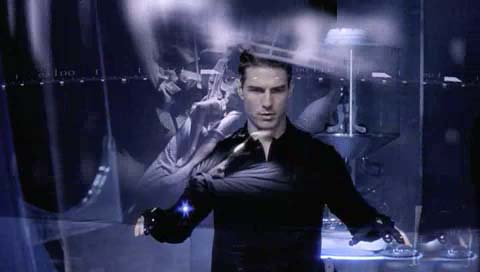
I was at JavaOne last week, hanging out with the Looking Glass team. What's most interesting there is that Go Monkey is using their software as the basis of a Minority Report like interface you control with gestures. Using that to view K-Web in 3D a dome display or CAVE would be amazing. You can get info on LG and a link to the Go Monkey video at https://lg3d-core.dev.java.net/
Posted by Patrick McKercher
Thursday, February 16, 2006
Jim Zaun, Crack Engineer (his official title bestowed by JB) blew us all away yet again with this: http://www.zaun.com/kweb/Node_Space_04.html
Click and drag! I thought at first it was a static image (which itself would have been impressive), but no! Use a scroll wheel on a mouse to get the full zoom in effect! Small file, no download, only Flash 7 needed.
I just attended a really interesting C5 conference at Berkeley which was very encouraging in terms of Opencroquet.org overcoming some technical challenges that have made VR difficult for education. I also presented K-Web to an enthusiatic group in Austin Texas . In addition we have productive talks going on with TheBrain.com, Looking Glass and FastSearch. Watch here for details on those.
Posted by Patrick McKercher
Sunday, January 08, 2006

The December meeting in San Jose was very energizing. Chris Imhof (see early posting below) showed us some really amazing results he's having with elementary school students making K-Webs (students who have graduated even come back to visit their work and use it in current projects). Alex Patillo, who wrote a Master's thesis on using K-Web also discussed success that at-risk high school students are having with K-Web. Jim Zaun showed Looking Glass and a new Flash demo of K-Web. We also had a very productive meeting at Sun Microsystem hosted by Kevin Roebuck, which included Sun and folks from Stanford and Berkeley. James also had a number of meetings related to various media projects. For those who could not join us, we'll schedule an online meetings in the next few weeks. Stay tuned!
Posted by Patrick McKercher
Thursday, November 03, 2005
We'll have teaqm meeting, open to everyone, Saturday December 3, in San Jose.
I've just finished putting together a proposal with a group from Oregon Public Broadcasting for a PBS grant (20 million total available) to investigate how to use digital technology as well as television to teach history better.
I'll be teaching a teacher's workshop for teachers in San Jose in December, and have just proposed a new lifelong learner course that will center on American visionaries like Doug Engelbart and Buckminster Fuller, using K-Web to investigate such folks.
Posted by Patrick McKercher
Friday, July 01, 2005

Looking Glass
Jim Zaun, James Burke and Patrick McKercher used Looking Glass, Sun's new 3D desktop browser to create the first complex nested globe (there's a mockup of nested globes in Activeworlds Education Universe, which has the virtue of being connected to immersive 3D worlds to explore , which can't be done in Looking Glass, but Jim actually had to work with matematicians at the Univ of Arizona to generate the globes).
We demo'd this at the big international Java conference in San Francisco on Weds.
You can see a crude video of an early version here: http://scylla.cse.ucsc.edu:8080/05-06-16.mpg
The nested globes looked fantastic on Sharp's 3D laptop
We'll post a more refined version of the video soon.
Looking Glass also has a new scheduler program that might be a fun approach for k-web timeline:
http://k-www.mickey.ai.kyutech.ac.jp/cosmo/index_e.html#screenshot
Google is also announcing some amazing tools that will big huge boosts in realizing James' vision of k-web. One is Google Earth, which allows you to fly aroind the world and even see 3D buildings (i have just seen my house from space (not 3d) and flown over paris, thru the grand canyon (i could see rapids and rocks!) and Yosemite (not quite so much deatil, but falls are there, and hiking trails). just amazing! http://earth.google.com/index.html you will need a game card to run this.
Google is also hosting video, which givesd us great potential as well. https://upload.video.google.com/
let's get going!
Posted by Patrick McKercher
Monday, April 11, 2005
Posted by Patrick McKercher
Monday, March 07, 2005
been busy of late with California Social Studies conference with Willie and Alex Patillo, as well as our online Town Hall meeting, both of which very well. At the online meeting, we decided to work on a game concept to help new users understand how to use the K-Web interface, building community around the PBS broadcast, creating lesson plans, fundraising and creating other visual materials to help people understand the overall capabilities of the K-Web system. You can see everyone's written input (and even add your own to the discussion) by logging into Groupmindexpress.com: http://gme.groupmindexpress.com/k-web/index.php3?object_id=c7745762c7917a09b94039b4523afb94 If you log in from main page, our site is k-web (case sensitive, Open the Feb. Mtg folder). The guest login is guest and the password is guest. If you want, you can add your name to the end of your entries. You can also hear a recording of the conference call until 03/27/2005 by following these steps:
1. To access the conference specified above, click on the link below or paste the entire URL into your browser: http://www2.readycall.com/moderator/presentation/Playback?id=693bec1c-8817-11d9-9923-00d0b7c50dff.rpm
2. At the prompt, enter your name and email address
3. Click "Submit". The playback will begin. You can safely skip the first and last ten minutes.
As always, your suggestions and questions are welcome.
Posted by Patrick McKercher
Monday, March 07, 2005
been busy of late with California Social Studies conference with Willie and Alex Patillo, as well as our online Town Hall meeting, both of which very well. At the online meeting, we decided to work on a game concept to help new users understand how to use the K-Web interface, building community around the PBS broadcast, creating lesson plans, fundraising and creating other visual materials to help people understand the overall capabilities of the K-Web system. You can see everyone's written input (and even add your own to the discussion) by logging into Groupmindexpress.com: http://gme.groupmindexpress.com/k-web/index.php3?object_id=c7745762c7917a09b94039b4523afb94 If you log in from main page, our site is k-web (case sensitive, Open the Feb. Mtg folder). The guest login is guest and the password is guest. If you want, you can add your name to the end of your entries. You can also hear a recording of the conference call until 03/27/2005 by following these steps:
| 1. To access the conference specified above, click on the link below or paste the entire URL into your browser: http://www2.readycall.com/moderator/presentation/Playback?id=693bec1c-8817-11d9-9923-00d0b7c50dff.rpm |
| 2. At the prompt, enter your name and email address |
| 3. Click "Submit". The playback will begin. You can safely skip the first and last ten minutes. As always, your suggestions and questions are welcome. |
Posted by Patrick McKercher
Friday, February 11, 2005
We're talking to Sun about using K-Web as their flagship demo at the JavaOne conference in June, and also about an event in the Silicon Valley that would be about Doug Engelbart's vision of high end collaborative systems. Stay tuned for details.
Posted by Patrick McKercher
Friday, December 10, 2004
Posted by Patrick McKercher
Friday, December 10, 2004
A pretty good overview of ET work: http://www.edwardtufte.com/tufte/advocate_1099
Two fundamental issues: 1) tri-dimensionality and multivariables
2) information resolution (ie number of bits per time or area.)
The history of science is the increase in resolution (eg eye to telescope, now 10 to 44th or 100 millions times greater?)
Exemplar: Napoleon's march http://www.edwardtufte.com/tufte/posters
1. A wise answer to fundamental question "Compared to What?"
2. Shows causality (important in policy and intervention thinking; what allows us to survive in nature [and one suspects in "civilization"] is causal thinking)
3. brilliant because it shows 6 dimensions/variable (eg time and temperature)
4. multi-modal: picture, text, color, # etc (and all together, not separate as in standard report format with figs in appendix).
5. it documents everything, tells about it, and gives source of data
6. Cares about quality of content, as well as relevance and context (first maxim of info presentation is Do No Harm, which Powerpoint violates; see Shuttle example below, as well as http://www.dmkdmk.com/articles/tufte.html; classic PPT spook of Gettysburg: http://www.norvig.com/Gettysburg/making.html). ET notes that it took him 20 years to note that the name Napoleon occurs nowhere in the graph, b/c he was irrelevant.
ET claims good info design does not vary with time, gender, culture etc. A document should be designed to evoke an apporpriate kind of thinking, and shopuld not cater to fashion or even ease of use [//Engelbart?]
RELEVANCE TO KWEB: presumably his talk/work could be used in support of simple/minimalist design, but i see in it validation of giving kweb user quite a lot of data and flexibility in combining it (eg a timeline that can be expanded out to 6 kinds/strata of data, with images and color, which then interact with maps (eg where and when are these artifacts found?)
TE on interactive graphics: http://www.edwardtufte.com/bboard/q-and-a-fetch-msg?msg_id=00000s&topic_id=1&topic=Ask%20E%2eT%2e
an nice video spoof of glitz in presentation is viz-o-matic at the bottom of http://www.tc.cornell.edu/WhoWeAre/Outreach/index.asp
i have more extensive notes on the talk if anyone wants them
Posted by Patrick McKercher
Friday, November 26, 2004
Last week I presented kweb at a really interesting elearning and digital library conference sponsored by Kevin Roebuck at Sun. One of the most interesting idea came from alexandria.ucsb.edu fellow, Freeston (from UK actually) who noted that berzerkely has software that allows you to enter an artifact, see instances of it on a map at a given time, then watch an animated map to see how instances change over time. They can map empires this way (eg the tea kettle ;) apparently the big lesson from this is never invade afganistan
It's kinda klunky, but it'd be so amazing to have icons of artifacts in the kweb timeline, as we discussed, then be able to click on it and map it.
I entered "airport" as search on the 1st link and got a map of australia
http://ecaimaps.berkeley.edu/clearinghouse/
Animated examples
http://www.timemap.net/index.php?option=com_content&task=view&id=124&Itemid=87
10.31.04
dipsea cafe
hlr, bek, jb, pm
hlr: can't write a Constitution in pix, thus text pretty useful (not bandwidth kludge ;)
------------
GAMES
What Makes Something Fun to Learn? Tom malone (stanford --> parc)http://portal.acm.org/citation.cfm?id=802839 http://www.selindaresearch.com/learning.htm
Gee rise of nations led to December 29, 2003 http://infocult.typepad.com/infocult/2003/12/games_informati.html
Games, information, and learning: Rise of Nations
commentary: A new paper from James Paul Gee, "Learning About Learning from a Video Game" http://web.reed.edu/cis/tac/meetings/Rise%20of%20Nations.pdf explores the implicit pedagogy of computer gaming. Focusing on the example of Rise of Nations, the author describes a learner-centered, self-paced, learning style-oriented approach.
Inspired, I downloaded the game, and concur with Gee. RoN has depths to it, beginning with the opening tutorial, a rich introduction to history and interface, intertwined. Repeated play adds more information about the dynamics of national planning and strategy, developed into learning by application and game feedback. Some of schoolings' structures - classes, progressive planned learning, involuntary socialization - are absent. Others appear in new forms: assessment by feedback and victory conditions; constructive learning by building a nation; information absorption. Critical thinking is embedded within the game and its feedback mechanisms: interface, production and development cycles, interaction with other nations. And I haven't gotten to the online multiplayer version yet.
The world's guru of fun, Bernie DeKoven, adds more thinking, noting, first, Gee's subtle point about the future of games and learning. Quoting from the paper:
Shortening and dumbing games down is not an option, since most avid players donÂ’t want short or easy games. Thus, if only to sell well, good games have to incorporate good learning principles in virtue of which they get themselves well learned. Game designers build on each otherÂ’s successes and, in a sort of Darwinian process, good games come to reflect yet better and better learning principles.
Speaking of the future, and thinking of educators, Bernie adds:
It's heady stuff. It has to be in order to be recognized by the community it needs to reach. But it's well worth the read, as are the other three papers in this collection - a taste of the promise of play and hope for the future of learning.
Learning is happening with RoN, on numerous levels. How do we capture this for education? Think of the questions: the fit of gaming cultures with K-12 and academia; mapping game topics and curricula; selection and implementation of preexisting games; the long, hard, storied creation of new ones, perhaps better suited; games as learning objects; the preservation problem. We'll come back to this.
(via Reed College's Technology Advisory Council)
December 29, 2003 at 08:39 in Collaboration tools, Cyberculture Permalink
TrackBackTrackBack URL for this entry:http://www.typepad.com/t/trackback/336255
------------------
Rick Borovoy, former MIT Media Lab Borovoy's vision began to develop during his five years at Apple Computer in the Classrooms of Tomorrow project where he studied the way wireless applications can facilitate kids' learning through the creation of distributed communities. cf folk computing http://portal.acm.org/citation.cfm?id=365316
--
trace sound networks
---
hlr: b/c technol change so fast, every 5-10 years a new "generation" with different abilites/cognitive domains emerges
--JB: change comes from no man's land between disciplines
--Cave painting were 1st 3d, an initiation into way of thinking?
--
~ Turner on psychedelic origins of PC (3D?), hlr sez it was Emersonian self reliance http://ryskamp.org/brain/lectures/lecture-fred-turner-from-counterculture-to-cyberculture
Jaron Lanier says America somewhat successful b/c we had hacker founding fathers, hlr sez Monticello a lab
scary: knowledge explodes while literacy fades; but some countries (generations?) may skip literacy the way 3rd world has skipped copper phone lines.
Paul Rankin, former Reuters fellow at Stanford, effect of WWW on tribal people; . As part of that project, he visited a UNESCO telecenter in Timbuktu, where he saw people waiting in line to use the machines, but found that many of them were illiterate, so needed someone to help them with the machine. Hence his goal: Empower the common person to use the internet without a scribe or other intermediary. He was looking for ways that more people per hour could be given access. His target market was both rural and urban poor, but since critical mass of users helped reduce expenses, he focused on the urban poor, looking at Favelas (slums in Brazil. See FavelaFaces.org for both stats and personal histories). These choices created constraints on his technology choices; it needed to be:
Cheap
Mobile
Voice-based ...
http://www.rdvp.org/~sketchpel/blog/2004/10/rdvp-seminar-paul-rankin-10272004.html
--COOPERATION/COMMUNITY
Lynn Margulis says mitosis is cooperation, deal with it ;) http://www.amazon.com/exec/obidos/search-handle-url/index=books&field-author=Margulis,%2520Lynn/104-7103216-6803925
The Creative Explosion: An Inquiry into the Origins of Art and Religion (Cornell Paperbacks)by John E. Pfeiffer http://www.amazon.com/exec/obidos/tg/detail/-/0801493080/102-0169215-3879339?v=glance
--interview with founder of Slashdot. a new model of cooperation, wales http://slashdot.org/article.pl?sid=04/07/28/1351230
wikipedia in 100 langs?! repairs itself in 4 min but damage costs more than repair cf JWales also dispute resolution on guns, abortion and ____ vs nupedia
both wiki and linux had benevolent but self-effacing dictators. JWales got out of the way when mediation levels provided sufficient filtering. what do we do until we hit this level/critical mass?
hlr: what's a valid connection? jb's 'secret sauce" critical thinking, unexpected
hlr follows the thread (all grist for mill), but how to impart this to kids? [mebbe kweb provides enough of a crutch/support to get a feel of what such "surfing" feels like, what's it's like to follow a scent or stick to the task long enough for payoff, since "mystery Tour" feature in kweb guarantees fun/payoff?]
Blogs give sense of being an author? it's "hard fun" in Allan Kay's sense? it's rhetorical in that the blogger has to filter, craft, condense, and that requires some sense of intended audience. Interesting in that it is an act of belevolence for common good, as author is trying to save time/energy/attention, ie our most valuable commodity [in fact sacrificing own for common good]
books: cod, longitude---
fun zeitgeist: http://www.wordspy.com/words/blog.asp
Posted by Patrick McKercher
Sunday, October 17, 2004
James has been refining the blueprint for the K-Web user interface. John Seely Brown's input on the community aspects have been very helpful in this.
James is also in discussions on publishing in China. With a billion potential K-Web users, we'd better get going on translation.
I'm teaching a seminar based on Doug Engelbart's work at UCSC. We're working on Doug doing a talk to recruit UC folk to build his collaborative dynamic knowledge repository, the K-Web being a modest step to his overall vision of a Hyperscope system powerful enough to address complex world problems (and they're all complex, don't let anyone kid you ;)
Posted by Patrick McKercher
Tuesday, August 24, 2004
Posted by Patrick McKercher
Thursday, July 15, 2004
Posted by Patrick McKercher
Monday, June 28, 2004
Actually after the conference I went to Seattle for a teacher's workshop, and got some good ideas for beta improvement. Jim Zaun has done a nice globe display we are currently integrating.
Adobe atmosphere will sponsor a contest for 3D VR content which should be ready in time for December launch. See http://www.atmospherians.com/ for examples.
Posted by Patrick McKercher
Friday, May 28, 2004
"I submit to you some pictures of my classroom web as well as some pictures of webs drawn by students of the web and the computer based one my students use daily. Our most recent effort is building a web from our two week study of Isaac Newton and the Royal Society. Students take individuals such as Robert Hooke, Edmond Halley, Christopher Wren, the Great London Fire, Plague etc and build and
connect the web. The next step is to build on or connect to previous connection webs - no problem. My students were excited that they were taking part in something special, after reading your email. Thank you for
your encouragement and the web sites. We look forward to being a part of this great endeavor.
Thank You
Christopher Imhof
Montessori School of Denver
Full text and pictures at http://www.k-web.org/imhof.htm
Posted by Patrick McKercher
Monday, April 26, 2004
Posted by Patrick McKercher
Monday, April 12, 2004
Looks like I'll be testing K-Web with lifelong learners of Osher Institute in June; we'll see a performance of Tom Stoppard's brilliant Arcadia, and use the K-Web to explore the dense historical layers and contemporary relevance. JB will do a videoconf with the class. We'll put as much as we can online.
Interesting looking book Leonardo's Laptop
Posted by Patrick McKercher
Wednesday, March 24, 2004
More books I wish I had time to read (just finished Tyla Tharp on creativity and recommend it highly http://www.amazon.com/exec/obidos/tg/detail/-/0743235266/ref=ase_forestsofcali-20/102-5348226-4492951?v=glance&s=books):
Rebecca Solnit – River of Shadows: Eadweard Muybridge and the
Technological Wild West
Bill Bryson – A Short History of Nearly Everything
Posted by Patrick McKercher
Monday, March 08, 2004
While in a bookstore up there I stumbled across The Measure of All Things: The Seven-Year Odyssey and Hidden Error That Transformed the World
by Ken Alder
which looks pretty interesting:
http://www.powells.com/cgi-bin/biblio?show=hardcover:sale:074321675x:9.98
Snippet of review: Amidst the chaos of the French Revolution, two intrepid astronomers set out in opposite directions from Paris to measure the world, one voyaging north to Dunkirk, the other south to Barcelona. Their findings would help define the meter as one ten-millionth of the distance between the pole and the equator, a standard that has since swept the planet. The Measure of All Things is the astonishing story of one of history's greatest scientific quests, a mission to measure the Earth and define the meter for all nations and for all time.
Yet when Ken Alder located the long-lost correspondence between the two men, along with their mission logbooks, he stumbled upon a two-hundred-year-old secret, and a drama worthy of the great French playwrights. The meter, it turns out, is in error. One of the two astronomers, Pierre-François-André Méchain, made contradictory measurements from Barcelona and, in a panic, covered up the discrepancy. The guilty knowledge of his misdeed drove him to the brink of madness...
Posted by Patrick McKercher
Monday, March 01, 2004
He is interviewed on Talk of the Nation (archived at http://discover.npr.org/rundowns/rundown.jhtml?prgId=5&prgDate=current)
He has amazing software for 3D called Croquet that will allow very powerful historical simulation environments:
More info:
opencroquet.org
Alan Kay : video of a lecture/demo: http://murl.microsoft.com/videos/stanford/cs547d/030425_OnDemand_100_100K_320x240.htm
http://www.lisarein.com/alankay/tour.html
Posted by Patrick McKercher
Saturday, February 21, 2004
Posted by Patrick McKercher
Friday, February 20, 2004
Talk of the Nation Science Friday interview: Ira Flato with JB on Knowledge Web (the book and the digital version) http://www.npr.org/ramfiles/totn/19990625.totn.02.ram requires Realplayer (free download from http://www.real.com/)
Posted by Patrick McKercher
Friday, January 30, 2004
Doug's current project, Hyperscope is explored in a blog associated with the video http://www.invisiblerevolution.net/
The blog has entries by Doug, as well as a 12 minute audio interview http://www.invisiblerevolution.net/doug-hs-intro-filt-c-.mp3
Posted by Patrick McKercher
Friday, January 23, 2004
The Macintosh Marketing Story:
Fact and Fiction, 20 Years Later
Speakers: Mike Murray, with Mike Boich, Andy Cunningham, Joanna Hoffman, Guy Kawasaki & Steve Scheier
Thursday, January 22, 2004
Location - Computer History Museum http://www.computerhistory.org/
ABSTRACT OF TALK
"It was the autumn of 1983. Business Week magazine had an IBM personal computer on its cover, with the ominous words, "And the winner is...IBM."
Apple Computer was in a world of hurt. The Apple II had lost its competitive edge. The Apple III was a sales disappointment and the Lisa, introduced in January 1983, was a financial failure.
Great expectations were being placed on the Macintosh, scheduled to launch on January 24, 1984. Yet there was skepticism both in and outside the company.
There was no hard disk support. The screen was too small and it wasn't in color. There was limited software. And the price was very high -- $2,495.
Yet this was indeed the computer for the rest of us. The engineers knew it. The software guys knew it. And Steve Jobs knew it.
The challenge for the Mac Marketing Team was simple: They had to establish and hold a beachhead. Or else they and the product would die.
The introduction of the Macintosh computer launched a comprehensive and integrated approach to high-tech marketing. Much of what was highly innovative in 1984 is now standard fare for all product introductions.
Join us as six key members of the Macintosh launch team tell the inside stories behind one of the most "insanely great" product launches of all times."
A number of the Mac engineers were in the audience, many of them getting big applause, especially Andy Herzfeld). The most common sentiment of all was "this was the most amazing time in my life," even "I owe it everything." Other interesting commonality was all were in their late 20's except the self-professed old man from the Apple II team, who was 32. Some had jumped ship from boring HP, for Hoffman (trained as an archaeologist) it was her first job, though she does not consider that she's ever had what most people would consider a job in her life.
Two inspirations and some luck/convergence/synchronicity: from Lucas, the first to get merchanidise pre-staged, so that when Star Wars came out, people could ally themselves with it through accoutrements, thus making in an instant cultural phenom (an instant happening, in the parlance of the day). This led to what Kawasaki termed the MacIntosh Product Cycle: Step One: make the T-Shirt."
Second, though there were many PC's on the market, Regis MeKenna understood that IBM was the only competition. As 1984 was approaching, ad agency Chiat/Day was pitching an Orwell concept to its big clients. Steve Jobs and moderator loved it immediately. For the first time a movie director did an ad (Ridly Scott, who made BladeRunner), and it was filmed in London. Many of the actors who looked like (neo-Nazi)skinheads actually were, sniffing glue in bags between takes and generally menacing everyone. The ad provoked 10 minutes of pandemoniumwhen previewed to the sales force. The board (except 1) refused to run it, and told them to sell their 30 and 60 second SuperBowl ad slots. The managed to dump the 30, but still had a million dollar slot left. The board went to archives for 2 Apple II ads, but none were usuable, so they relented. It's true the ad was shopwn only once (gutsy) but it was in fact shown in its entirely the next evening on all 3 networks as news. Three weeks later the board literally applauded those who had championed the ad.
Apple also tried to associate the Mac with celebs (eg having them make art that could ber published; Gary Trudeau"s satire on the Regean administration was unprintable). Jobs apparently met Mick Jagger at an Andy Warhol party, which led to the Mac for Mick (or vice versa) initiative. When the Mac was subsequently delivered, Mick had no interest (or apparently memory).
Another interesting attribute was the pirate mentality (they actually flew the skull and crossbones flag over the building). Guy K ok'd the giveaway, although he did not have the authority to do so, $750,000 worth of software (he claims it was only $745K, and that someone higher up had given the nod).
I see a number of parallels between the Mac and K-Web, and I got some ideas thast we can use (e.g., university consortium and support of user groups). Though I'm not sure we will be able to get the visceral impact that people got the first time they touched a mouse and saw the cursor move, but I think we will get a strong omygod when people "get" what they can do with K-Web. The other strong lesson I took away, and have seen in K-web as well, is that creative and commited people can do "insanely great" things together with relatively little resources ("IBM had 400 people working on colleges; we had Dan'l Lewin"). The other common sentiment was projects like the Macintosh are rare, and it's a priviledge to be a part of one. Amen.
Posted by Patrick McKercher
Sunday, January 04, 2004
Amazon.com's Best of 2001
Working in his garden one day, Michael Pollan hit pay dirt in the form of an idea: do plants, he wondered, use humans as much as we use them? While the question is not entirely original, the way Pollan examines this complex coevolution by looking at the natural world from the perspective of plants is unique. The result is a fascinating and engaging look at the true nature of domestication.
In making his point, Pollan focuses on the relationship between humans and four specific plants: apples, tulips, marijuana, and potatoes. He uses the history of John Chapman (Johnny Appleseed) to illustrate how both the apple's sweetness and its role in the production of alcoholic cider made it appealing to settlers moving west, thus greatly expanding the plant's range. He also explains how human manipulation of the plant has weakened it, so that "modern apples require more pesticide than any other food crop." The tulipomania of 17th-century Holland is a backdrop for his examination of the role the tulip's beauty played in wildly influencing human behavior to both the benefit and detriment of the plant (the markings that made the tulip so attractive to the Dutch were actually caused by a virus). His excellent discussion of the potato combines a history of the plant with a prime example of how biotechnology is changing our relationship to nature...
Posted by Patrick McKercher
Friday, December 19, 2003
led me to an interesting thesis on visual display http://acg.media.mit.edu/people/fry/thesis/ which led me to
h3 display (spherical) om page 35 figure 2.3.4 and its creator http://graphics.stanford.edu/%7Emunzner/ who is at UBC, my alma mater and the location of Steve Dipaola and our northern "skunkworks" see a image that does not do the work justice http://ivizlab.sfu.ca/research/knowviz; having read JB, this synchronicity is not w/o precedent ;)
Posted by Patrick McKercher
Friday, December 19, 2003
Posted by Patrick McKercher